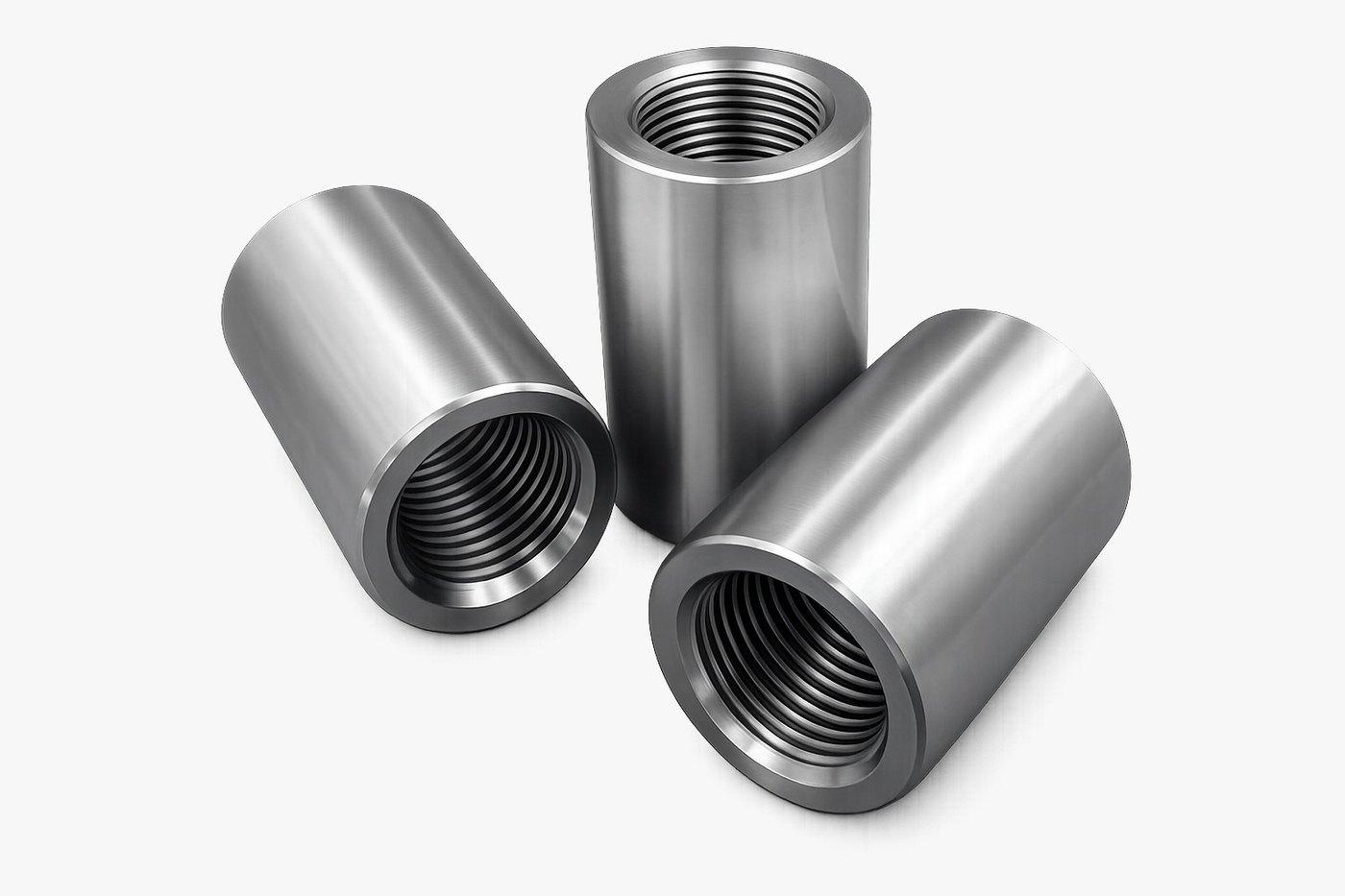
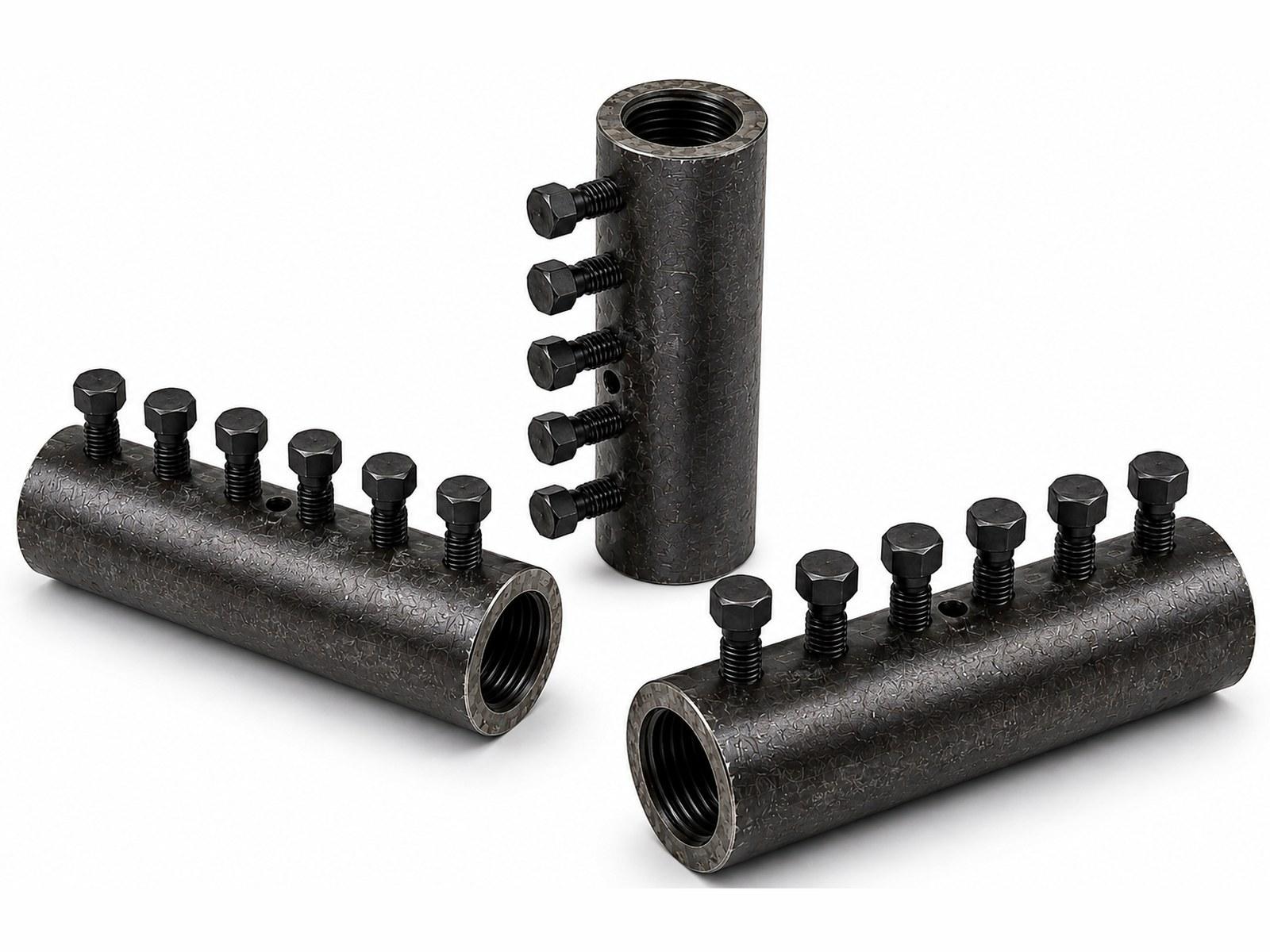
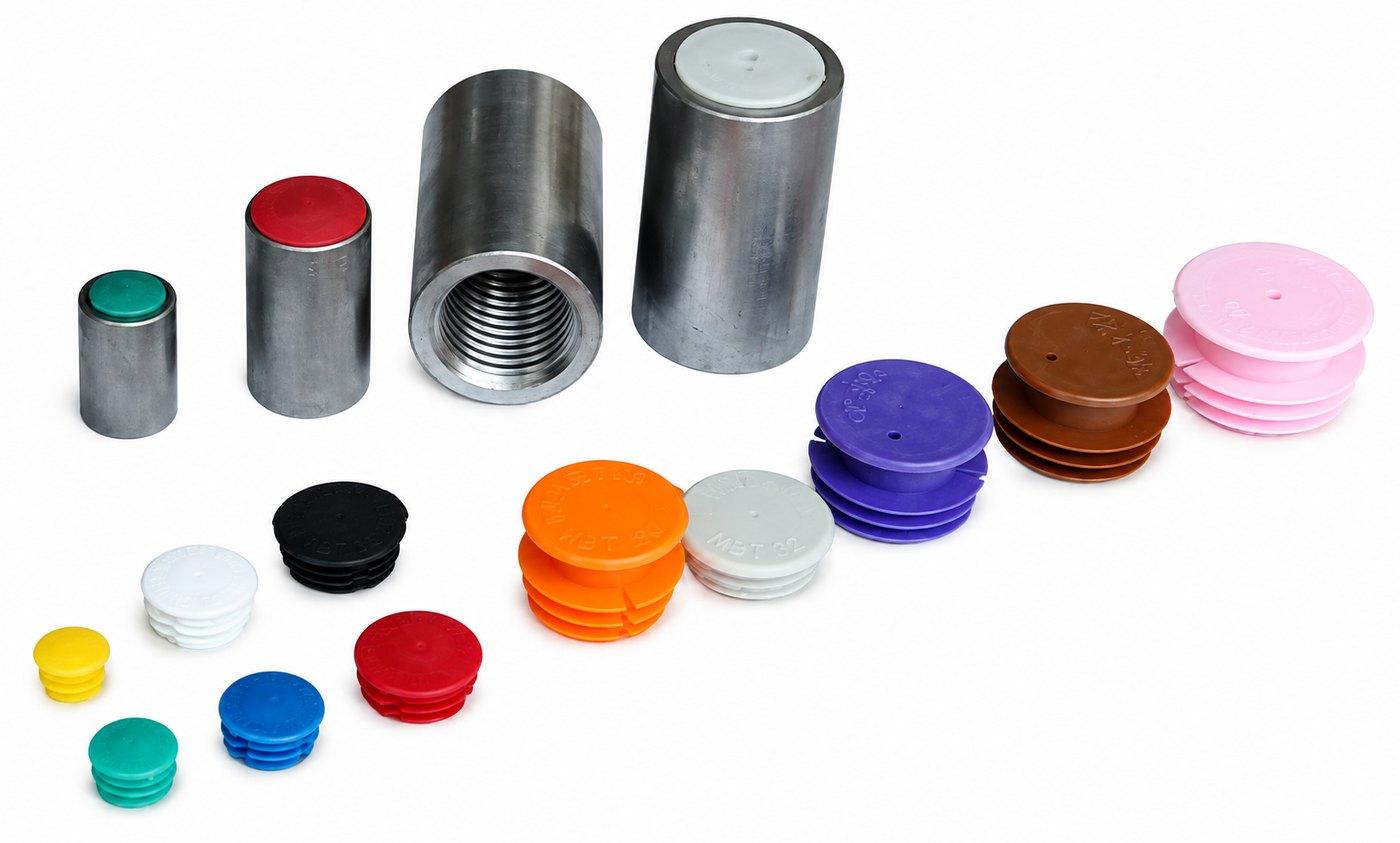
A threaded coupler, a bolted coupler and the cap that keeps a cut thread usable in between. All three are made at our Rajkot works, so a splice specified on a drawing is the splice that reaches the deck.
The two couplers do the same job and are chosen on one question: can the bar be turned? Where it can, thread it. Where it cannot, bolt it.
Swipe the table to compare
| High-quality Rebar Couplers | Reliable MBT Rebar Couplers | Durable Rebar Thread Protection Caps | |
|---|---|---|---|
| How the joint is made | A parallel thread cut into a cold-forged bar end | A row of high-strength bolts clamped onto the bar | Pushed over a cut thread, gripping on the ribs |
| Bar sizes | 12 – 40 mm | 10 – 32 mm | 12, 16, 20, 25 and 32 mm |
| Bar preparation | Cut square, cold forged and threaded at the works | Ends cut square and cleaned — nothing else | None; fitted once the thread is gauged |
| Bar has to be turned | Yes — the sleeve is turned on until it seats | No | No |
| Made where | At the works, before dispatch | On site, with ordinary spanners | Either — fitted at the works or loose to the yard |
| How you check it | Sleeve seated on a fully engaged thread | Bolt heads have sheared off | Right colour on the bar for its size |
| Choose it when | Bars can be turned and the splice is planned into the cage | Bars are long, bent or already fixed, or on repair and retrofit work | A cut thread has to wait between pours |
Not sure which suits your rebar schedule? Send it over and we will mark it up.